
If you have ever priced a silver coin or bar, you will have noticed it costs more than the spot price on the chart. That extra amount is the silver premium over spot. It is one of the biggest costs for anyone buying physical silver, and it varies a lot between products and over time. This guide explains what the premium covers, why it changes, and how to compare it fairly.
What is a silver premium over spot?
The spot price is the wholesale market price for silver in large bars. By contrast, retail buyers usually purchase small coins and bars. Turning wholesale metal into those products, and getting them to you, costs money. The premium is the difference between the product’s price and the spot value of the silver it contains.
For example, take a hypothetical spot price of $30.00 per ounce and a one-ounce coin priced at $34.50. The premium is $4.50, or 15% over spot. These figures are for illustration only.
What the silver premium covers
Several costs make up the premium:
- Fabrication. Refining, minting and finishing small products costs far more per ounce than casting large bars.
- Distribution. Wholesalers, shipping and insurance each add a margin.
- Dealer costs and profit. Retailers cover staff, storage, payment fees and their own margin.
- Taxes, in some countries. In the UK, for instance, silver bullion carries 20% VAT, while investment gold has been VAT-exempt since 1 January 2000.
Tax rules vary widely by country and, in the US, by state. Check the rules where you live before comparing prices across borders.
Why premiums differ between products
| Product type | Premium level | Why |
|---|---|---|
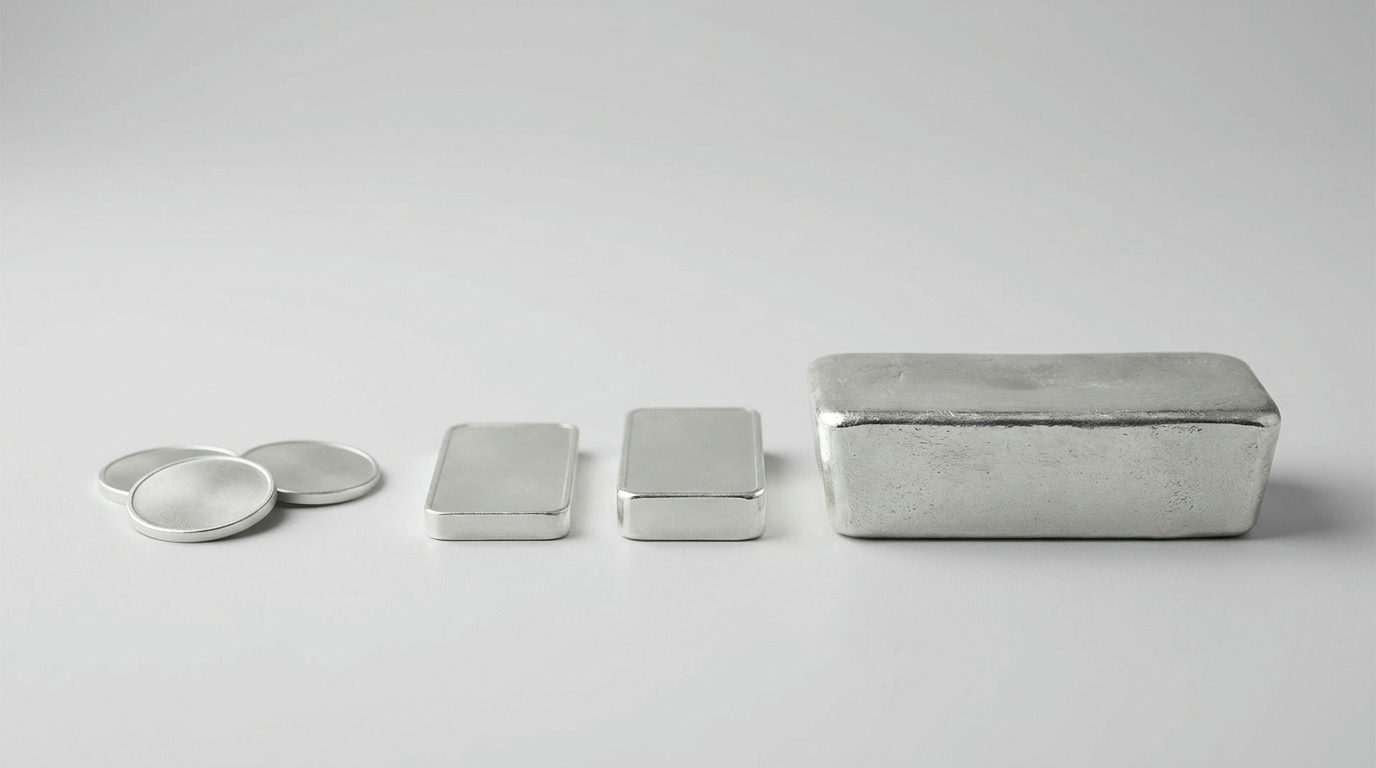
| Large bars (e.g. 100 oz, 1 kg) | Lower | Fixed fabrication costs spread over more ounces |
| Generic rounds and small bars | Moderate | Simple production, no legal-tender status |
| Government bullion coins | Higher | Mint costs, recognisable designs, strong resale demand |
| Fractional and collectible coins | Highest | High cost per ounce, numismatic value |
These are general patterns, not fixed figures. A higher premium is not always worse. Some products with higher premiums are also easier to resell, which can narrow the gap when you sell.
Why silver premiums change over time
Premiums are not fixed. They rise and fall with supply and demand for physical products.
When retail buying surges, mints and refiners can struggle to keep up, and premiums tend to rise. For instance, the Silver Institute’s World Silver Survey 2026 reported that coin and net bar demand rose 14% in 2025. When demand cools, dealers compete harder and premiums tend to ease.
The spot price itself also matters. A premium quoted in dollars becomes a smaller percentage as the spot price rises. So it helps to compare premiums as a percentage of spot, not just in dollars.
How to compare silver premiums fairly
- Note the live spot price at the same moment you check the product price.
- Work out the premium per troy ounce of silver content, not per coin. Our troy ounce silver guide explains the conversions.
- Include shipping, payment fees and any tax in the total.
- Check the dealer’s buyback price too. The gap between buy and sell prices, the spread, is a separate cost. We explain it in our silver bid ask spread guide.
Frequently asked questions
Why is silver so far above spot price?
Retail products carry fabrication, distribution and dealer costs, and sometimes tax. Those costs are large relative to silver’s price per ounce.
Do silver bars have lower premiums than coins?
Generally, yes. Larger bars spread fixed production costs over more ounces, so their premium per ounce is usually lower.
Is there VAT on silver in the UK?
Yes. Silver bullion in the UK is subject to VAT at 20%, unlike investment gold, which is exempt.
Do premiums matter when I sell?
Yes. Dealers usually buy back below their selling price, and sometimes below spot. So check both prices before you buy.
Sources
- Gold.co.uk: VAT on gold and silver bullion
- Summary of the Silver Institute’s World Silver Survey 2026 (April 2026)
- LBMA: London Good Delivery, Gold and Silver
This article is general information, not financial or tax advice. Example prices are for illustration only. Prices shown on any site may lag the live market, so check an official source before making any decision.
Written and reviewed by the SilverPriceCharts.com editorial team. Sources are linked above.