
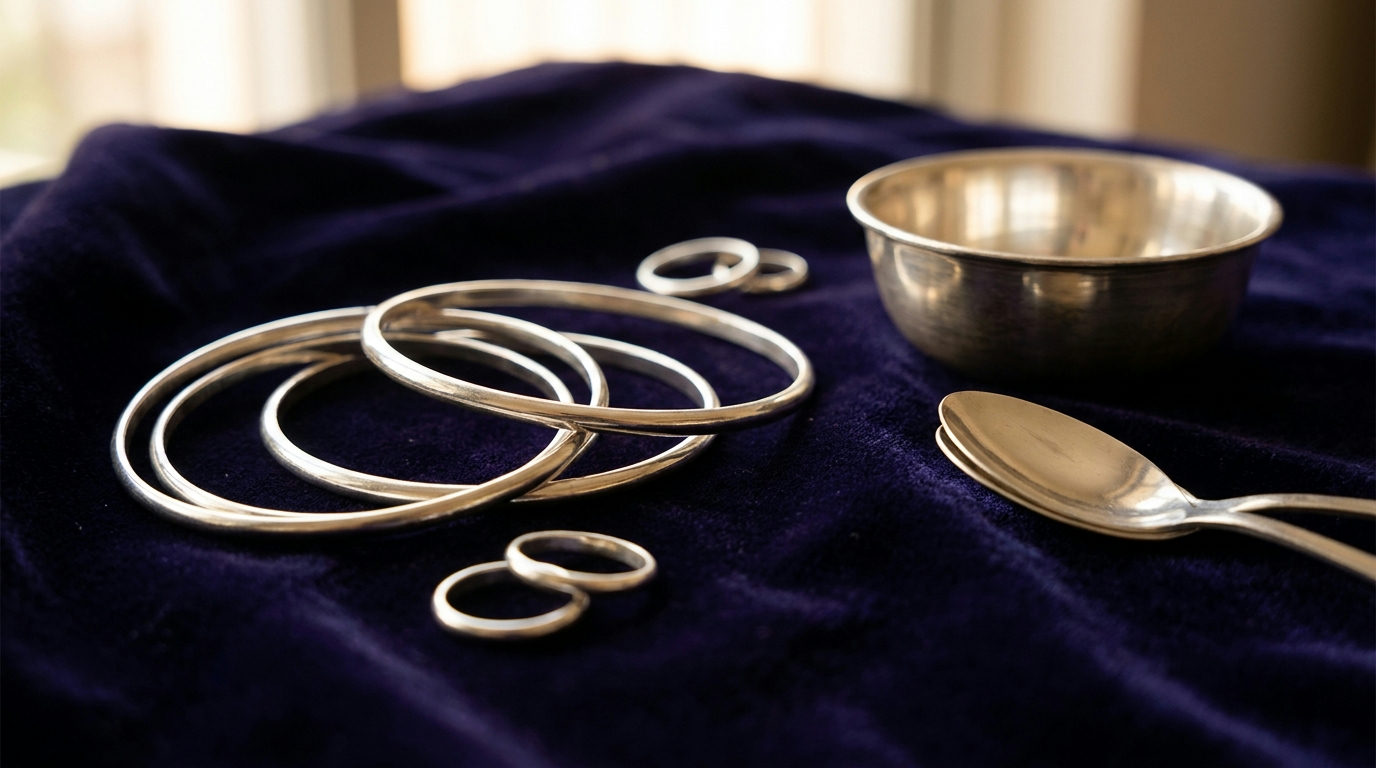
Jewellery and silverware are among the oldest uses of silver, and they still take a large share of the metal each year. Silver jewelry demand is also one of the most price-sensitive parts of the market. When prices rise, buyers cut back, and some sell old pieces for scrap. This guide explains how big this demand is, where it comes from, and how it reacted to recent high prices.
How big is silver jewelry demand?
According to the Silver Institute’s summary of its World Silver Survey 2025, global silver jewellery fabrication rose 3% in 2024 to 208.7 million ounces. Silverware demand fell 2% that year to 54.2 million ounces, a three-year low. Together, that is well over 250 million ounces a year.
However, 2025 looked very different. According to the World Silver Survey 2026, global silver jewellery fabrication fell 8% in 2025, with the losses concentrated in India, where far higher prices weighed on spending.
| Year | Jewellery fabrication | Silverware |
|---|---|---|
| 2024 | 208.7 million oz, up 3% | 54.2 million oz, down 2% |
| 2025 | Down 8% | Fell, led by India |
| 2026 (forecast) | Double-digit decline expected | Double-digit decline expected |
Sources: Silver Institute summary of the World Silver Survey 2025; World Silver Survey 2026, as reported by Mexico Business News (May 2026).
India: the centre of silver jewellery
India is the most important market for silver jewellery and silverware. Silver is used for jewellery, gifts and religious items, and purchases often cluster around festivals and weddings. In 2024, India drove most of the gains in jewellery fabrication, according to the Silver Institute, helped by an import duty cut and a healthy rural economy.
In 2025, the picture reversed. Much higher prices weighed on discretionary spending, according to the survey, so Indian demand fell sharply. Silverware is especially sensitive, because much of it is bought as gifts.
Why silver jewelry demand is so price-sensitive
- Discretionary spending. Jewellery and gifts are easy to postpone when prices jump.
- Fixed budgets. Many buyers spend a set amount, so higher prices mean fewer grams.
- Selling back. High prices also encourage people to sell old pieces, which boosts recycling. We explain that in our guide to silver recycling.
This makes jewellery a natural brake on the market. When prices rise sharply, jewellery demand tends to fall and scrap supply tends to rise, which can ease tightness.
What this means for the silver market
Jewellery demand usually moves opposite to price in the short term. So a strong rally can cut jewellery offtake, while a fall in prices can bring buyers back. For how jewellery fits into total demand, see our guide to silver supply and demand.
Frequently asked questions
How much silver is used in jewellery?
About 208.7 million ounces in 2024, according to the Silver Institute. Fabrication then fell 8% in 2025.
Which country buys the most silver jewellery?
India is the key market for silver jewellery and silverware, and it drives most of the changes in global demand.
Why did silver jewellery demand fall in 2025?
Mainly because much higher prices weighed on spending, especially in India, according to the World Silver Survey 2026.
Does jewellery demand affect the silver price?
It can. Falling jewellery demand and rising scrap sales can ease tightness when prices climb.
Sources
- Silver Institute: Silver Supply and Demand (World Silver Survey 2025 data)
- Mexico Business News: World Silver Survey 2026 (May 18, 2026)
- USGS: Mineral Commodity Summaries 2026, Silver (February 2026)
This article is general information, not financial advice. Survey figures are estimates and may be revised. Forecasts may not come true.
Written and reviewed by the SilverPriceCharts.com editorial team. Sources are linked above.