
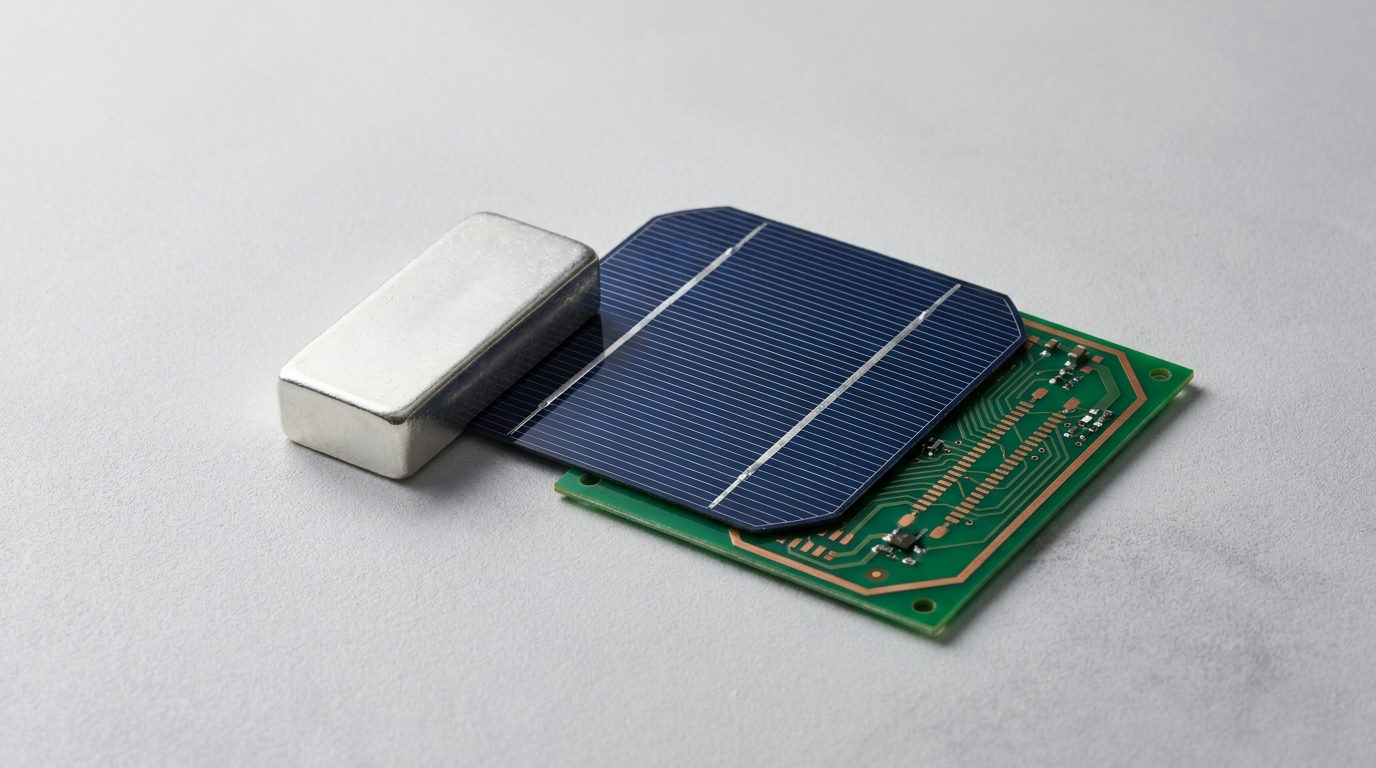
What drives silver prices? In short: industrial demand, investment demand, mine supply, the US dollar, interest rates and the gold price. Silver is unusual because it is both an industrial metal and an investment asset, so it responds to factory orders and to fear in financial markets. This guide takes each driver in turn, with data from the Silver Institute’s World Silver Survey 2026, published in April 2026.
The silver market in numbers (2025)
| Measure | 2025 figure | Change vs 2024 |
|---|---|---|
| Total demand | About 1.13 billion oz | Down 2% |
| Industrial demand | 657.4 million oz | Down 3% |
| Coin and net bar demand | Rose | Up 14% |
| Mine production | 846.6 million oz | Up 3% |
| Recycling | 197.6 million oz | Up 2% |
| Market balance | Deficit of 40.3 million oz | Fifth deficit in a row |
Source: Silver Institute and Metals Focus, World Silver Survey 2026, as reported in April 2026. Figures are estimates and may be revised.
1. Industrial demand
Industry is the largest single use of silver. On the survey’s figures, industrial demand made up roughly 58% of total demand in 2025. Silver conducts electricity better than any other metal, so it is used in electronics, solar panels, vehicles and power grids.
As a result, silver often reacts to the health of manufacturing and to trends such as solar installation. According to the survey, industrial demand fell 3% in 2025 after four years of growth. For 2026, the survey expects a further decline, mainly because solar makers are using less silver per panel.
2. Investment demand
Investors buy silver as coins, bars and exchange-traded products. This demand can change quickly, and it often drives the sharpest price moves. In 2025, coin and net bar demand rose 14%, according to the survey, and it was forecast to rise further in 2026.
Investment demand tends to rise when people worry about inflation, currency weakness or financial stress. It also tends to follow price momentum, which can amplify both rallies and falls.
3. Mine supply and recycling
Most silver is not mined for its own sake. According to a summary of the survey, primary silver mines produced only about 26% of output in 2025. The rest came as a by-product of mining lead, zinc, copper and gold.
This matters because silver supply does not respond quickly to silver prices. If copper or zinc output falls, silver output can fall too, whatever the silver price. Recycling adds flexibility, since high prices encourage people to sell old jewellery and silverware. In 2025, recycling reached a 12-year high.
4. The US dollar
Silver is priced in US dollars, so a weaker dollar tends to support the dollar price of silver, and a stronger dollar tends to weigh on it. However, this link is a tendency, not a rule. We explain it in detail in our guide to the silver price and US dollar.
5. Interest rates
Silver pays no interest. When interest rates rise, holding cash or bonds becomes more attractive, which can weigh on silver. When rates fall, the opportunity cost of holding silver drops. In addition, rate changes affect the dollar, which feeds back into silver.
6. The gold price
Silver often moves in the same direction as gold, because many investors treat the two as related safe-haven metals. However, silver usually moves more sharply in both directions. The gold-silver ratio is one way to track how the two compare.
How the drivers combine
No single factor sets the price. On a given day, a strong dollar might push silver down while rising investment demand pushes it up. Over longer periods, the balance between supply and demand matters more. For instance, repeated deficits, like the five recorded since 2021, draw down above-ground stocks and can tighten the physical market.
On a chart, these forces show up as trends, spikes and reversals. Our guides to the silver moving average and silver support and resistance explain how to read them.
Frequently asked questions
What drives silver prices the most?
There is no single driver. Industrial demand is the largest use of silver, but investment demand often causes the biggest short-term moves.
Why is silver more volatile than gold?
Silver’s market is smaller, and its demand depends on both industry and investors. That mix tends to produce larger price swings.
Does silver mining respond to higher prices?
Only partly. Most silver is a by-product of other metals, so output depends heavily on copper, lead, zinc and gold mining.
What is a silver market deficit?
It means total demand exceeded total supply in a year, with the gap covered from existing stocks. The survey recorded a fifth consecutive deficit in 2025.
Sources
- SilverTrade: The Silver Institute releases 2026 World Silver Survey (April 15, 2026)
- Investing News Network: Silver Institute sustained supply deficit (April 27, 2026)
- Mexico Business News: World Silver Survey 2026 (May 18, 2026)
This article is general information, not financial advice. Survey figures are estimates and may be revised. Past relationships between markets do not guarantee future ones.
Written and reviewed by the SilverPriceCharts.com editorial team. Sources are linked above.