
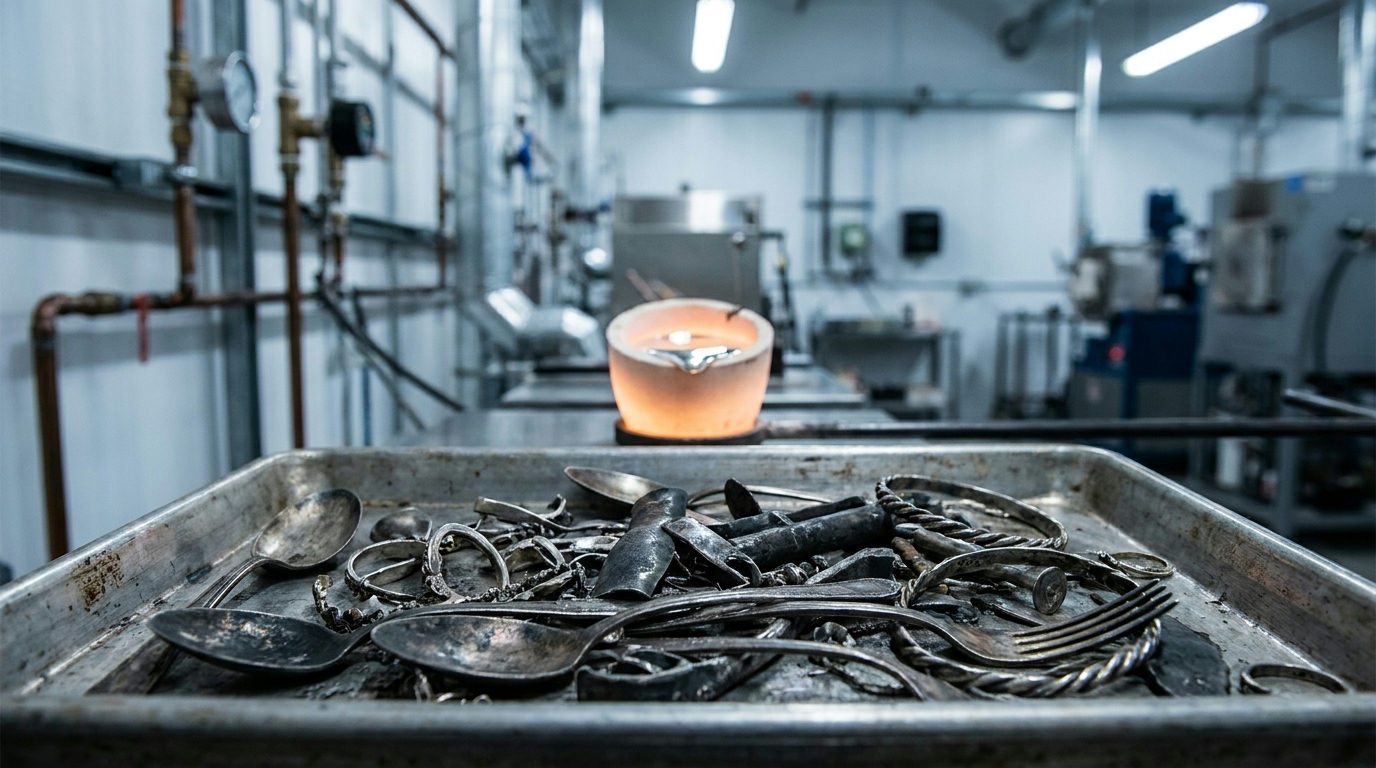
Not all silver supply comes from mines. A large share each year comes from recycling old jewellery, silverware, industrial catalysts and electronic scrap. Silver recycling is the part of supply that responds fastest to price, which makes it an important piece of the market puzzle. This guide explains where recycled silver comes from, how much there is, and why it rises when prices climb.
How much silver is recycled?
According to the Silver Institute’s World Silver Survey 2026, recycling rose 2% in 2025 to 197.6 million ounces, a 12-year high. That was about 18% of total supply of 1,090.4 million ounces, making recycling the second-largest source after mine production.
Where recycled silver comes from
| Source | How it works | 2025 trend |
|---|---|---|
| Jewellery and silverware | People sell old items for their metal value | Heavy selling, especially in India |
| Industrial catalysts | Silver is recovered from used ethylene oxide catalysts | Rose |
| Electronic scrap | Silver is recovered from discarded electronics | Fell |
| Photographic and other scrap | Older sources such as photographic film | A smaller, long-term declining source |
Source: World Silver Survey 2026, as reported by Mexico Business News (May 2026). The last row is general background, not survey data.
Why silver recycling rises with price
Recycling is price-sensitive. When silver is expensive, people have a stronger reason to sell old jewellery and silverware. Likewise, businesses have more reason to collect and refine scrap. So high prices pull more recycled metal into the market.
In 2025, that is exactly what happened. According to the survey, jewellery and silverware were the main sources of extra selling. However, refinery bottlenecks capped volumes, so recycling rose only 2% despite much higher prices. In other words, the ability to process scrap can limit how fast recycled supply grows.
Why silver recycling matters for the market
- A faster supply response. Mine supply reacts slowly because most silver is a by-product. Recycling can react within months. See our guide to by-product silver.
- A price cushion. Extra scrap can ease tightness when prices spike, which may limit how far prices run.
- Capacity limits. Refinery bottlenecks, like those seen in 2025, can slow this response.
- Industrial losses. Much industrial silver is used in tiny amounts, so it is hard or uneconomic to recover. That silver effectively leaves the market for good.
A US example
The US Geological Survey tracks secondary production, meaning refined silver from new and old scrap. It estimated about 1,000 tons of US secondary refinery production in 2025, compared with about 1,100 tons from US mines. That shows how significant recycling can be relative to mining in some countries.
Reading silver recycling data
When you see recycling figures, check which categories drove the change. A rise led by jewellery selling in response to high prices tells a different story from a rise in industrial scrap. For how recycling fits into the overall balance, see our guide to silver supply and demand.
Frequently asked questions
How much silver is recycled each year?
About 197.6 million ounces in 2025, a 12-year high, according to the World Silver Survey 2026.
What is the main source of recycled silver?
Jewellery and silverware were the key sources of extra selling in 2025, along with industrial scrap such as used catalysts.
Does silver recycling increase when prices rise?
Generally, yes. Higher prices encourage more selling of old items and more recovery of scrap, although refining capacity can limit the increase.
Can all industrial silver be recycled?
No. Much of it is used in very small amounts inside products, which makes recovery difficult or uneconomic.
Sources
- Mexico Business News: World Silver Survey 2026 (May 18, 2026)
- SilverTrade: The Silver Institute releases 2026 World Silver Survey (April 15, 2026)
- USGS: Mineral Commodity Summaries 2026, Silver (February 2026)
This article is general information, not financial advice. Survey figures are estimates and may be revised.
Written and reviewed by the SilverPriceCharts.com editorial team. Sources are linked above.