
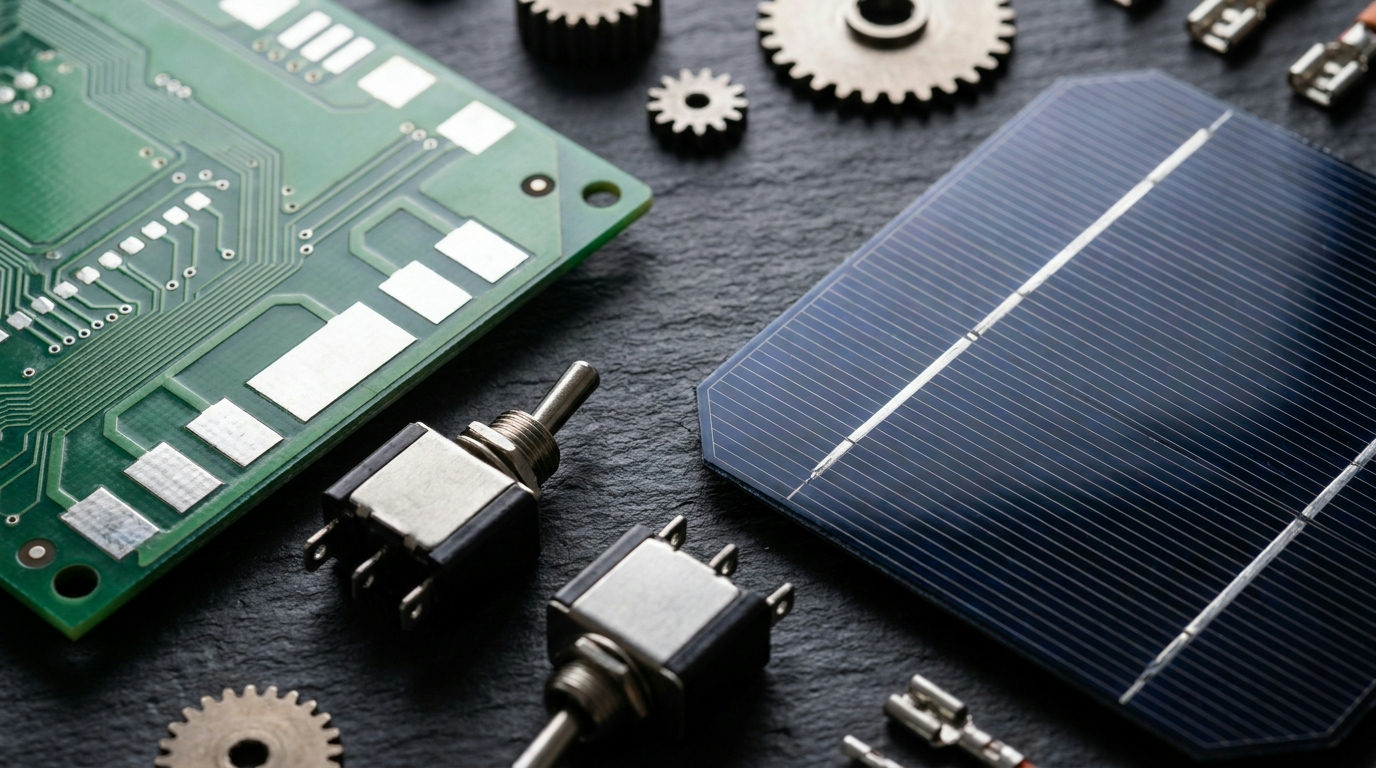
Industry is the largest single user of silver. It takes more of the metal each year than coins, bars and jewellery combined. So silver industrial demand is one of the most important numbers for anyone reading the silver market. This guide explains what industry uses silver for, what the latest data shows, and why the trend recently turned lower.
Why industry uses silver
Silver has the highest electrical and thermal conductivity of any metal, according to the US Geological Survey. It is also highly reflective and has antimicrobial properties. Those qualities make it hard to replace in many uses, even when prices are high.
Silver industrial demand in 2025
According to the Silver Institute’s World Silver Survey 2026, industrial demand fell 3% in 2025 to 657.4 million ounces. That was about 58% of total silver demand, and it was the first decline since the pandemic.
| Area | 2025 trend | Main reason |
|---|---|---|
| Solar photovoltaics (PV) | Down 6% to 186.6 million oz | Makers used less silver per cell and substituted other materials |
| Electronics, data centres, vehicles and grids | Gains in several areas | AI data centres, electric vehicles, grid infrastructure and electronics |
| Total industrial demand | Down 3% to 657.4 million oz | Solar losses outweighed gains elsewhere |
Source: World Silver Survey 2026, as reported by SilverTrade (April 2026).
Solar: the biggest swing factor
Solar panels use silver paste to carry electricity out of each cell. For years, rapid growth in solar installations pushed silver demand higher. However, high silver prices give manufacturers a strong reason to use less. In 2025, the survey reported that “thrifting”, meaning using less silver per cell, and substitution cut solar demand by 6%.
For 2026, the survey forecast a further 3% fall in industrial demand, chiefly because of a marked slowdown in solar offtake. So solar is now a source of downside risk to demand, not just growth.
Electronics, vehicles and grids
Outside solar, silver goes into switches, contacts, circuit boards, sensors and connectors. Growth in AI data centres, electric vehicles and power grid projects provided some support in 2025, according to the survey. These uses tend to need small amounts of silver per item, but across millions of products the total adds up.
A US snapshot
The USGS publishes a breakdown of US silver use. For 2025, it estimated:
- Electrical and electronics: 25%
- Other industrial uses and photography: 19%
- Net physical investment in bars: 18%
- Photovoltaics: 15%
- Coins and medals: 14%
- Jewellery and silverware: 6%
- Brazing and solder: 3%
This is US-only data, so it differs from the global picture. Still, it shows how widely silver spreads across industry.
What industrial demand means for the price
Because industry takes the largest share of silver, changes in manufacturing can move the market. Strong factory activity tends to support demand, while weak activity or heavy thrifting tends to reduce it. However, investment demand often causes bigger short-term price moves. For the full picture, see our guides to silver supply and demand and what drives silver prices.
Frequently asked questions
What is silver used for in industry?
Mainly electronics, solar panels, vehicles, power grids, brazing and solder, and a range of chemical and medical uses.
How much silver does industry use?
According to the World Silver Survey 2026, industrial demand was 657.4 million ounces in 2025, about 58% of total demand.
Why did silver industrial demand fall in 2025?
Mainly because solar manufacturers used less silver per cell and switched some uses to other materials.
Is solar still growing silver demand?
Not in 2025. Solar demand for silver fell 6%, and the survey expected a further slowdown in 2026.
Sources
- SilverTrade: The Silver Institute releases 2026 World Silver Survey (April 15, 2026)
- Mexico Business News: World Silver Survey 2026 (May 18, 2026)
- USGS: Mineral Commodity Summaries 2026, Silver (February 2026)
This article is general information, not financial advice. Survey figures are estimates and may be revised. Forecasts may not come true.
Written and reviewed by the SilverPriceCharts.com editorial team. Sources are linked above.